
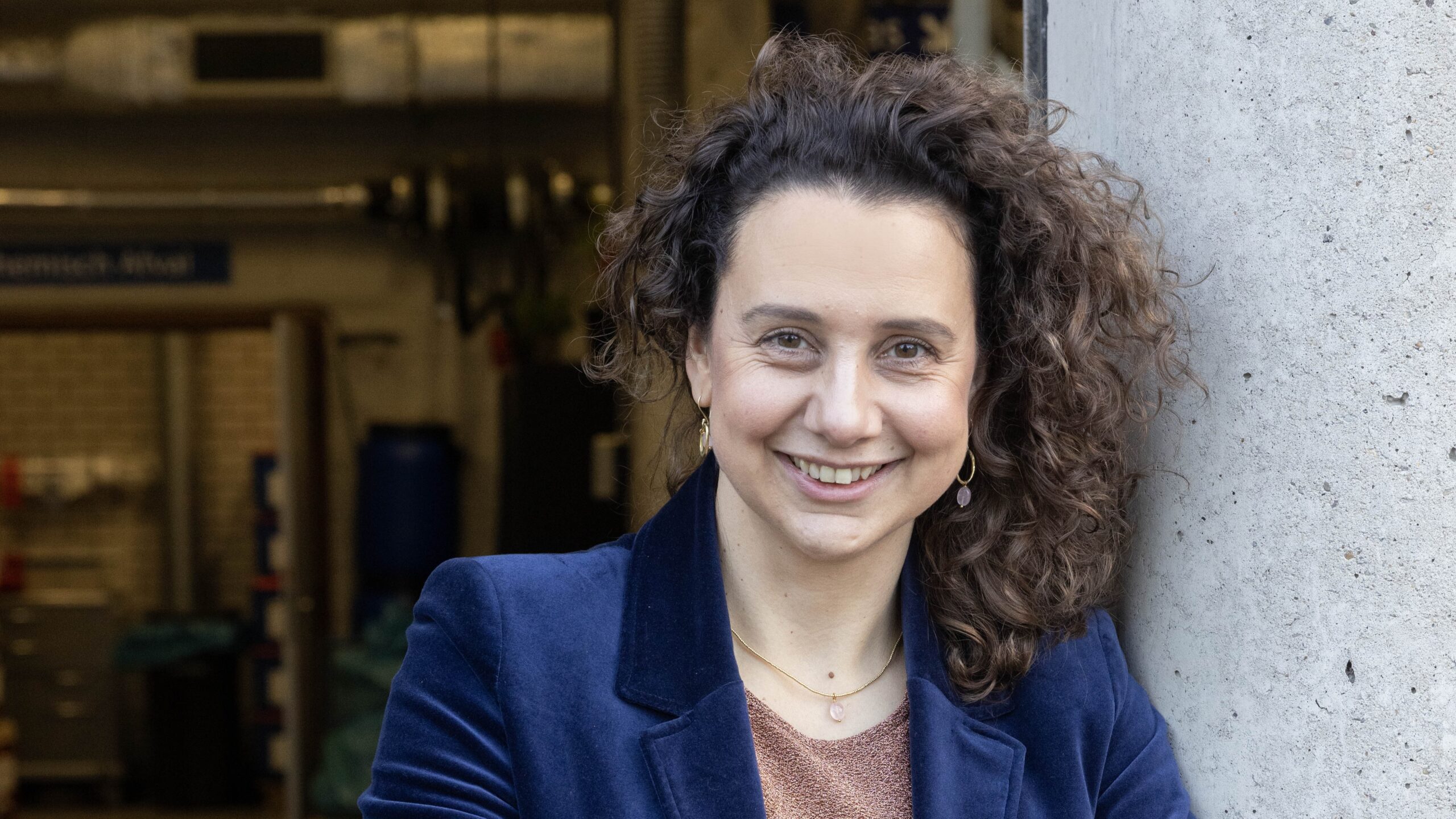
Celina Kroon works as Sustainability Manager at the University Medical Center Utrecht. She previously worked as Innovation Manager at Alliander, among other roles, where she took an area-based approach to natural gas-free neighbourhoods.
Within UMC Utrecht she is responsible for reducing material use (circularity), lowering the climate footprint and improving the impact on people, the environment and society. She sees resilience as an integral part of her work. For her, resilience is about robust supply chains behind products and services, which she believes will ultimately lead to better availability, accessibility and affordability of care. In the healthcare domain, she sees a lot of potential gains.
“Sustainable healthcare makes care humane, affordable, efficient and resilient.”
“Healthcare uses roughly 13% of all raw materials. Making it more sustainable is therefore a precondition for future-proof care. Less dependence on disposable materials and scarce raw materials makes healthcare more robust and more affordable.
The ambition towards 2027 is to scale up circular healthcare practices and embed them structurally in the chain. Circular healthcare emerges when healthcare institutions, suppliers, government, health insurers and financiers return to common sense.
At the table, three practices were mentioned that demonstrate system change: refuse: eliminating unnecessary disposable textiles, rethink: circular gloves and remanufacturing of medical instruments. With major impact on costs, fewer procedures, more humane care and raw material use.
This requires accepting each other's substantiation around safety and critically reviewing existing protocols. In addition, collective procurement and product innovation, in collaboration between suppliers and healthcare providers, are essential. It is also necessary to use laws and regulations to create barriers for disposable instruments, so that reusable alternatives become the new standard.”
Celina took part in the Resilience Conference on 12 June in Utrecht as a panellist and session leader. UMC Utrecht is also a partner of the conference.